

Professor Rose Luckin
Emeritus Professor of Learner Centred Design, University College London, CEO, EDUCATE Ventures and Author of “AI For School Teachers"
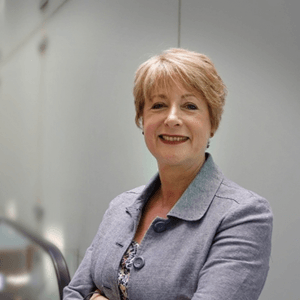
Professor Rose Luckin
Emeritus Professor of Learner Centred Design, University College London
CEO, EDUCATE Ventures and Author of “AI For School Teachers"
Rose Luckin is an internationally respected academic and influential communicator across multiple stakeholders about the future of education and technology, particularly Artificial Intelligence (AI). With over 30 years of experience, she is a recognised expert on AI in education, serving as an advisor to policymakers, governments, and industry globally.
Professor Emerita at University College London and Founder and CEO of Educate Ventures Research Limited (EVR), a company that provides thought leaderships, training and consultancy to the education sector to help them leverage AI ethically and eLectively. Throughout her career, Rose has held key leadership roles in academia, including serving on the Director’s Strategy Group at the UCL Institute of Education from 2011-2015 and as
Pro-Vice-Chancellor, University of Sussex, Director of Undergraduate Studies for Science and Technology, and Co-Founding Director of the Human Centred Technology research group all at the University of Sussex.
In recognition of her contributions, Rose was honoured with the Bett Outstanding Achievement Award in 2025, as a Leading Woman in AI EDU at the ASU-GSV AIR Show in 2024 and she received the 2023 ISTE Impact Award, becoming the first person outside North America to receive their top honour. She was also awarded the International Francqui Chair in 2018 by the Francqui Foundation in Belgium, named one of the 20 most influential people in education in the 2017 Seldon List and one of the 50 most influential women in UK tech by Computer Weekly in 2024.
A prolific author, Rose has published extensively in academic journals, books, and conference proceedings. Her 2018 book, “Machine Learning and Human Intelligence: The Future of Education for the 21st Century,” available in English and Mandarin, describes how AI can be eLectively used to support teaching and learning. Her most recent book, “AI for Schoolteachers,” published in 2022, is an essential and accessible guide to AI for
anyone involved in education.
As a highly sought-after speaker, Rose regularly delivers keynotes and public lectures across the globe on AI, ethics, and the future of education. She engages with the public through a monthly column in the Times Educational Supplement and op-eds in the Financial Times, Guardian, and China Daily. Rose has also appeared on various media outlets, including BBC Radio 4, ITV News, and CNBC.
In addition to her academic and entrepreneurial roles, Rose serves as an advisor to Cambridge University Press and Assessment and is co-founder of the Institute for Ethical AI in Education. She is also President of The Self-Managed Learning Centre in Brighton and sits on a range of advisory boards within the education and training sector, including membership of the UK Department for Education Science Advisory Council.
Rose holds a PhD in Cognitive and Computing Sciences and a First Class Bachelor’s degree in AI and Computer Science, both from the University of Sussex. Prior to her academic career, she achieved Associateship of the Chartered Institute of Bankers.